L-Stairs – Turning Staircases
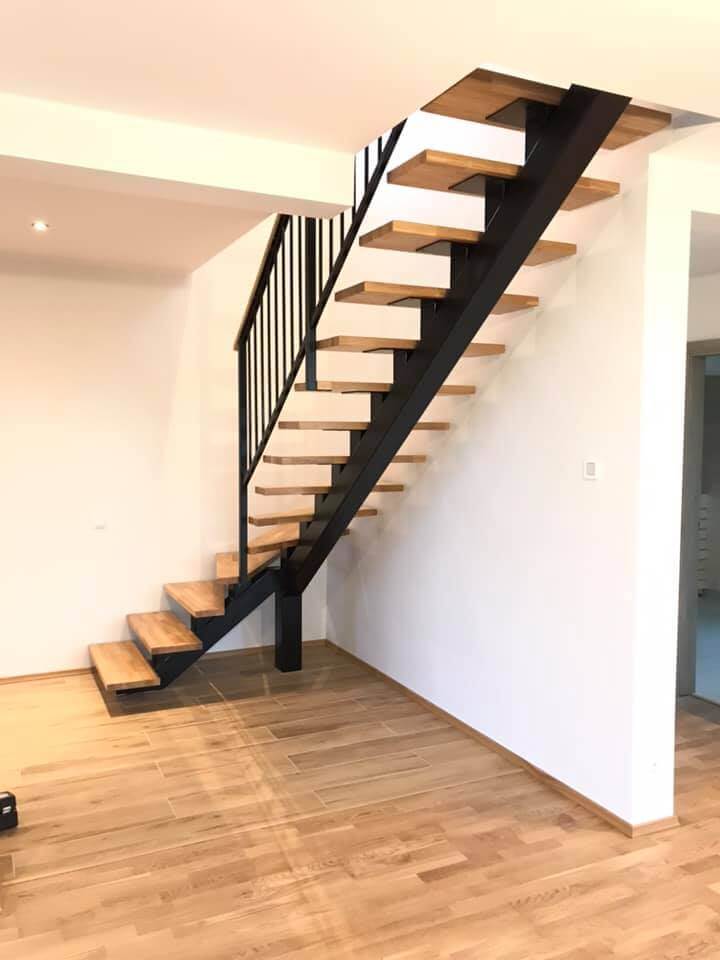
L-shaped stairs are staircase solutions that at first glance resemble straight stairs but include a turn. The turn can be 90 degrees and may be located in the middle of the staircase or at the top or bottom. Adding this turn makes the stairway more versatile and allows for a smooth transition between different floors. Because the turn requires additional reinforcement in the staircase structure, L-shaped stairs are usually slightly more complex than straight stairs.
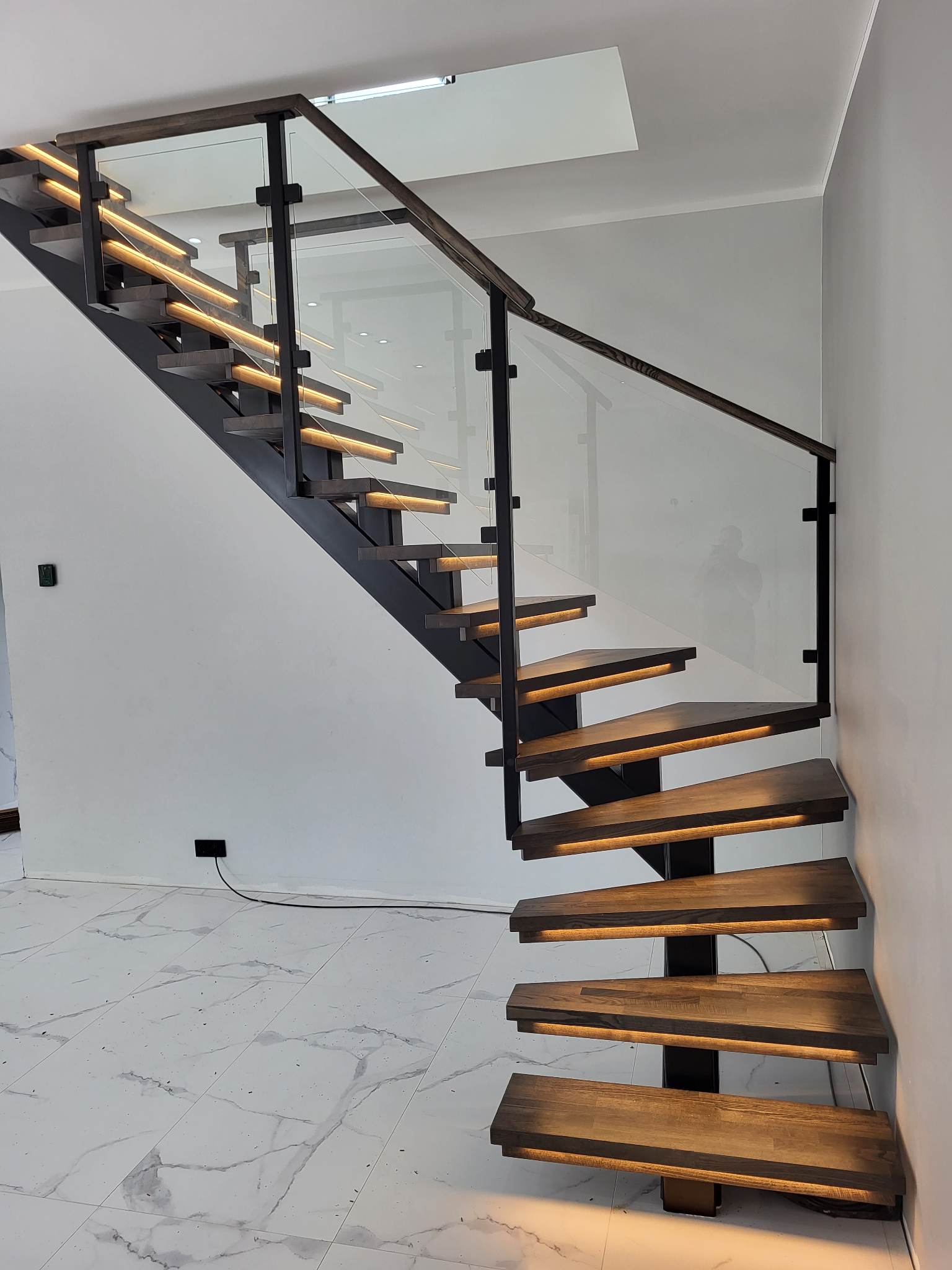
With L-shaped stairs, it is possible to choose between two different turning techniques: a turn with a landing or a turn with wedge-shaped steps. If there is enough space, a landing turn can be considered, as it creates a comfortable resting point and a visually pleasing element in the stairway. If space is limited, it is more practical to choose a turn with wedge-shaped steps, which helps save space and allows for a smoother transition.
When choosing a landing turn, it should be taken into account that the landing may eliminate 3–4 risers. This means that if you want to maintain a moderate slope, the angle of the staircase must be adjusted accordingly after adding the landing. A turn with wedge-shaped steps is preferable when the length of the stair hall does not allow for the addition of a landing, in order to avoid an overly steep ascent.
L-shaped stairs offer several advantages. They can increase privacy by creating a visual barrier between floors and fit well into room corners, helping to save space. However, their construction requires more skill and planning, especially when the layout of the turn and steps is more complex.
Installing handrails on L-shaped stairs requires special attention. If the turn occurs at an early stage (around the 4th–5th step), the railing can be installed only on the rise following the turn. This not only reduces costs but also minimizes obstacles when moving furniture between floors.
In summary, L-shaped stairs provide versatile solutions for connecting spaces, and their different turning options allow them to be adapted to the specific spatial and functional needs of a room.